>Books
"Missing Ingredients" by Pinchas Shir
This book is not intended for someone who is new to the Bible or has never seriously studied it. It is meant for those who took plenty of time but still feel like something is missing.
Introductions, annotations, and a selection of handpicked digitized books for online reading. These titles were chosen to enhance the study of the ancient historical and cultural context of the Bible.
>Books
This book is not intended for someone who is new to the Bible or has never seriously studied it. It is meant for those who took plenty of time but still feel like something is missing.
>Books
Jodi Magness is a Distinguished Professor of Early Judaism at the University of North Carolina at Chapel Hill and a member of the American Academy of Arts and Sciences. This book is cleverly subtitled "Jewish daily life in the time of Jesus" to afford it a broader Christian
>Books
Since most Enoch scholars agree that the text was originally Aramaic or Hebrew, this new translation seeks to create a sense that one is reading a Semitic text periodically using Hebrew vernacular alongside English. Thus, my new text has a different feel. By the way, I recently published two books:
>Books
The Book of Enoch is a well-known Jewish composition from the Second Temple era. Archaic English translations of Enoch are in the Public Domain and all over the Internet. This new translation presents the ancient text in modern, easy-to-read English. The primary goal of this new translation was to produce
>Books
Inside this book are new and updated translations of seven Jewish texts from the Second Temple Era: Prayer of Manasseh, Book of Baruch, Psalms of Solomon, Testament of Moses, Lives of the Prophets, Apocalypse of Moses, and Apocalypse of Abraham. Because these spiritual works are extra-canonical, their voices are often
>Books
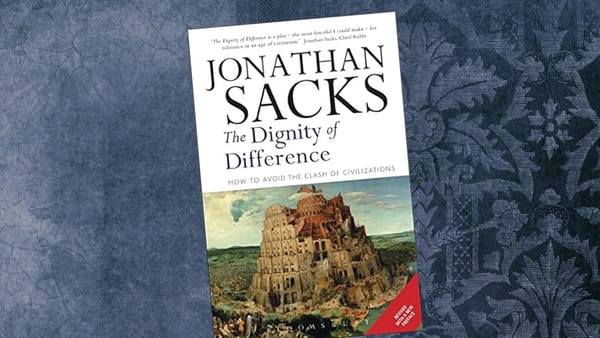
"The Dignity of Difference" by Jonathan Sacks presents a compelling argument that diversity should not be feared or suppressed but rather celebrated and embraced. By acknowledging and respecting our differences, we can foster a more harmonious and peaceful society. Rabbi Sacks emphasizes the inherent dignity and worth of
>Books
The Book of Baruch (ספר ברוך, Sepher Baruch), also known as 1 Baruch, is a non-canonical text attributed to Baruch ben Neriyah (ברוך בן נריה), a scribe and close associate of the prophet Jeremiah. The current version of the text we have today was likely put together by a Jewish
>Books
Discover the “Hebrew Insights from Revelation” with verse-by-verse explanations of Chapters 1-5 of John’s Apocalypse. This enriching study aims to reconnect readers with the Hebrew roots and Semitic essence of Revelation, bridging a significant cultural and linguistic divide that has existed for centuries. This book introduces you to a
>Books
My friend Eli and I have just released a new and exciting book! We invite you to uncover the “Hebrew Visions in Revelation” with insightful explanations of key imagery from Revelation Chapters 6-14 of John’s Apocalypse. This book delves into the Jewish background and meanings of the visions that
>Books
The Apocalypse of Abraham (התגלות אברהם, Hitgalut Avraham) is an ancient Jewish apocalyptic text believed to have been written between 70 and 150 CE. While the surviving manuscripts are in Old Slavonic, it is widely accepted that the original composition was in a Semitic language, evident from the presence of
>Books
This book by Prof. Daniel Boyarin explores the popular topic of the parting of ways between Christianity and Judaism. Only instead of tracing the historical circumstances of how the Synagogue and Church slowly drifted apart, he proposes a completely different outlook on how it really happened. I was deeply intrigued
>Books
Strack (1848-1922) was a Professor of the Old Testament at the University of Berlin. His classic introduction to Rabbinic literature was revised and updated by Gunter Stemberger, an established expert on Rabbinic history and literature. This book is the only comprehensive one-volume introduction to the subject that I know. I