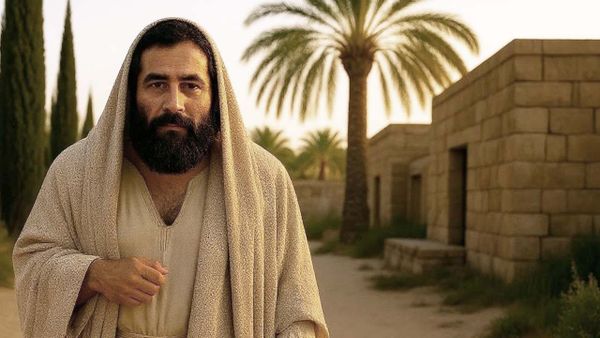
Why Would Christians Say That Christ Has Not Risen?


A few years back, the Gospel Herald reported that according to a BBC poll, 25 % of Christians in Great Britain said, “Jesus’ resurrection was not real.” It turns out that according to the survey results, one in four of those who considered themselves Christians in Great Britain do not truly believe the resurrection of Jesus really happened as the gospels report it. Hard to believe? A total of 2,010 adults were interviewed for this curious study. Some who were questioned were not Christians, so their answers and skepticism are understandable. About half of the respondents were not Christians, but 50% indeed considered themselves Christians. And that is astonishing. Beyond that, a majority, about 57 % of the respondents, described themselves as “active Christians”, meaning they attend worship services at least once a month and believe in what the Bible teaches. However, among all the broader self-identified Christian groups who answered the survey (active and non-active), only 31 % take the message of the Bible word-for-word and factually.
Roughly 40% percent of these British Christians questioned said they believe the story of Jesus rising from the dead, but not exactly how the Bible puts it. The majority of Christians questioned in the survey affirmed that they embrace the idea of “life after death,” which in the survey included the concepts of heaven, hell, and even reincarnation. Interestingly, about 9 % of non-religious respondents claimed they actually believe in Christ’s resurrection, while 1 % of these said they believed the gospel story of Jesus’ resurrection literally. So the survey broadly concluded that about a quarter of Britain’s Christians do not really believe that Jesus rose from the dead.
What happened? It’s hard to say, exactly. Similar polls in the USA are not this disparaging. According to a Rassmussen poll, nearly 70% of registered US voters (not merely self-identified active Christians) believe that Jesus Christ physically rose from the dead. It could be the particular BBC sample itself that revealed that nearly a quarter of respondents who identified as Christian in the UK don't believe that Jesus rose from the grave literally was off somehow. But it would not be a stretch to suggest that this could be a result of not reading the Bible or being told that the Bible should not be understood literally in general.
How can those who never read the Bible have any sort of high regard for it? And for those who are reading the gospels, perhaps they are not understanding them in the proper historical context. The gospels are ancient Jewish documents and are permeated with Semitic thought patterns and relate their stories through Middle Eastern literary techniques, full of kal vachomer logic, gezerah shava comparisons, and midrash, too. Even the time rendering and chronology of the gospels follow how ancient Jews measured time, and this can be confusing. No wonder Westerners have always struggled to understand the Bible and even the New Testament. For centuries, many wanted to accept all information in the Bible literally, using the linguistic tools of English, and that wholesale approach caused them trouble. Now, as a result, many desire to see the Bible’s message non-literally, and that causes problems of its own, as the survey could be pointing out.
The answer to this problem is a responsible study and teaching of the Bible immersed in its native linguistic and cultural context. Understanding the authors, their values, and their world should precede the interpretations of their words and certainly precede theology. Sure, there is no lack of metaphor in the Bible, but not all of those stories are meant to be merely symbolic. And even though they were meant to be seen as symbolic, the points they make are tied to real people striving to live holy lives for God's glory. It is not uncommon for Jewish stories to be multi-layered, not presenting an interpreter with a singular choice but offering several things that are true simultaneously - "this is true, and that is true also" approach.
Some traditional ideas of what the Bible passages mean have to be reconsidered, and the Bible has to be re-read in a new light. This could cause angst and even fear in some people. But why would honest and sincere people have fears? It may be painful and uncomfortable for those who are deeply entrenched in the status quo to move away from things as they are. I understand. But it would be even more painful if the trend the BBC survey showed continues, and more and more of those who consider themselves Christian would deny the fundamentals of their own faith. There is a better way, and people may find this surprising, but Jewish approaches to studying the Bible may actually help!
 Pinchas Shir
 Pinchas Shir
 Pinchas Shir
 Pinchas Shir