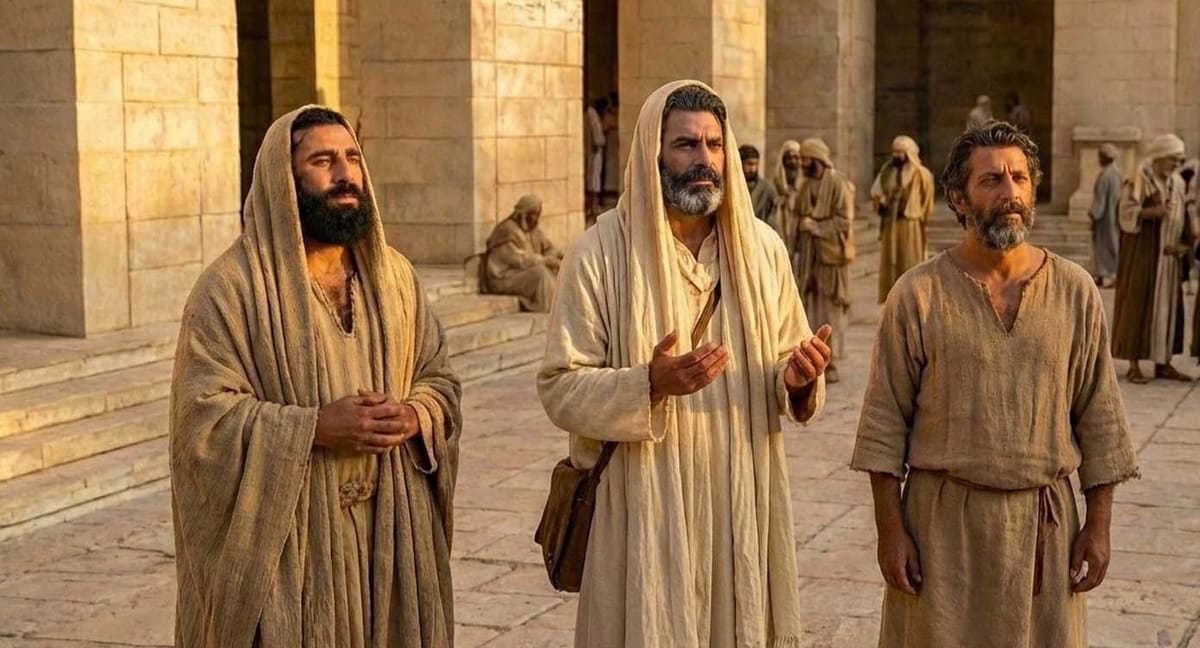
Apostle Paul's Christian and Jewish Identity

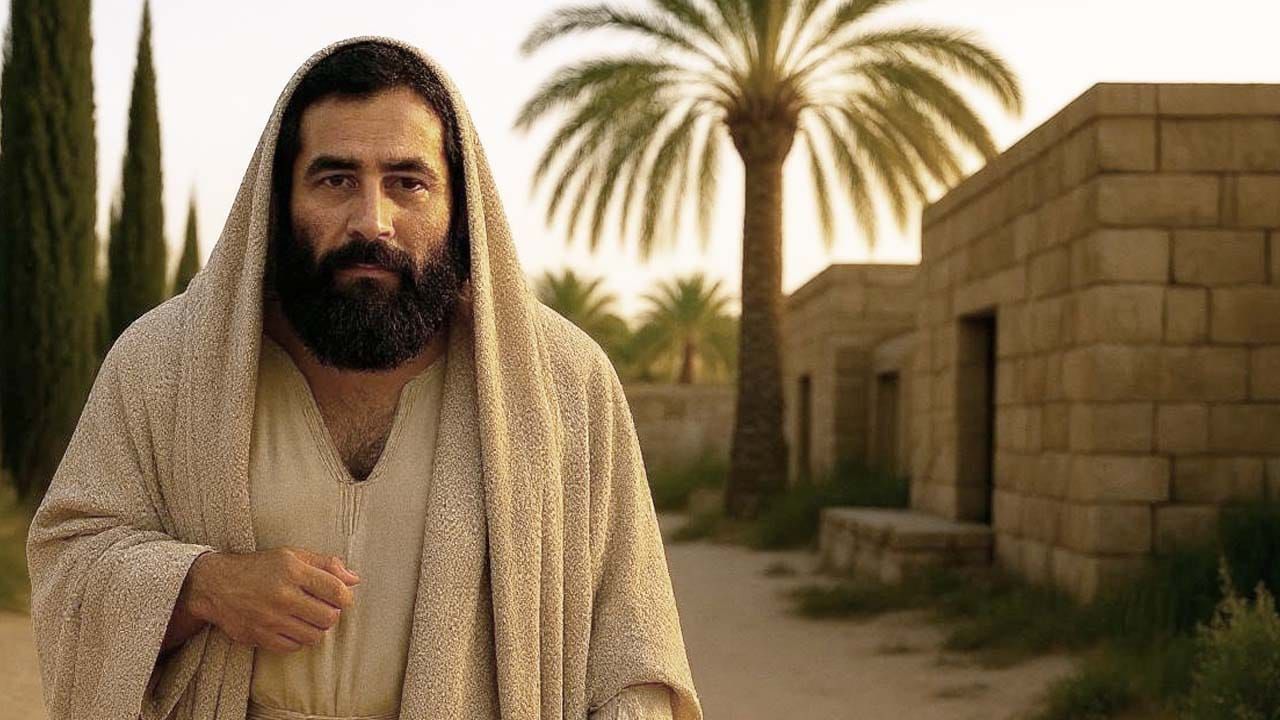
It is quite common for people to think of Paul as a Christian. After all, so much of what is called Christian is based on his teachings, which are a part of the Scriptures all Christians recognize. But surprisingly, though he had many opportunities to do so, Paul did not actually refer to himself as a Christian. Thus, calling Paul a Christian could be a bit of a misnomer. Defending himself before procurator Felix Paul, he said the following:
“I admit to you, that according to the Way which they call a sect I do serve the God of our fathers, believing everything that is in accordance with the Torah and that is written in the Prophets” (Acts 24:14 NASB).
“The Way” was the name of the faith movement that the Jewish Apostle mentioned. Standing before another council, Paul identified himself as “a Pharisee, son of Pharisees.” Surprisingly, in this passage, he does not say he was a Christian who used to be a Pharisee (Acts 23:6). Paul implied that he was still very much a Pharisee, someone who maintained unique Pharisaic beliefs, which is why he was actually being persecuted and brought before the council.
Defending himself before King Agrippa, Paul insisted that he always “lived as a Pharisee according to the strictest sect” (Acts 26:5). Once again, Paul says he was a Pharisee when he could identify himself as a Christian. Surprised? Was he dishonest or duplicitous? Was he trying to mislead the king? Did he lie to the council in Acts 23:6, too? The problem for many modern Bible readers is that the apostle spoke these words long after his encounter with the risen Christ on the road to Damascus. Paul was not a deceiver; he was never shy or ashamed of Christ, yet he did not call himself a Christian on the pages of the New Testament.
 Pinchas Shir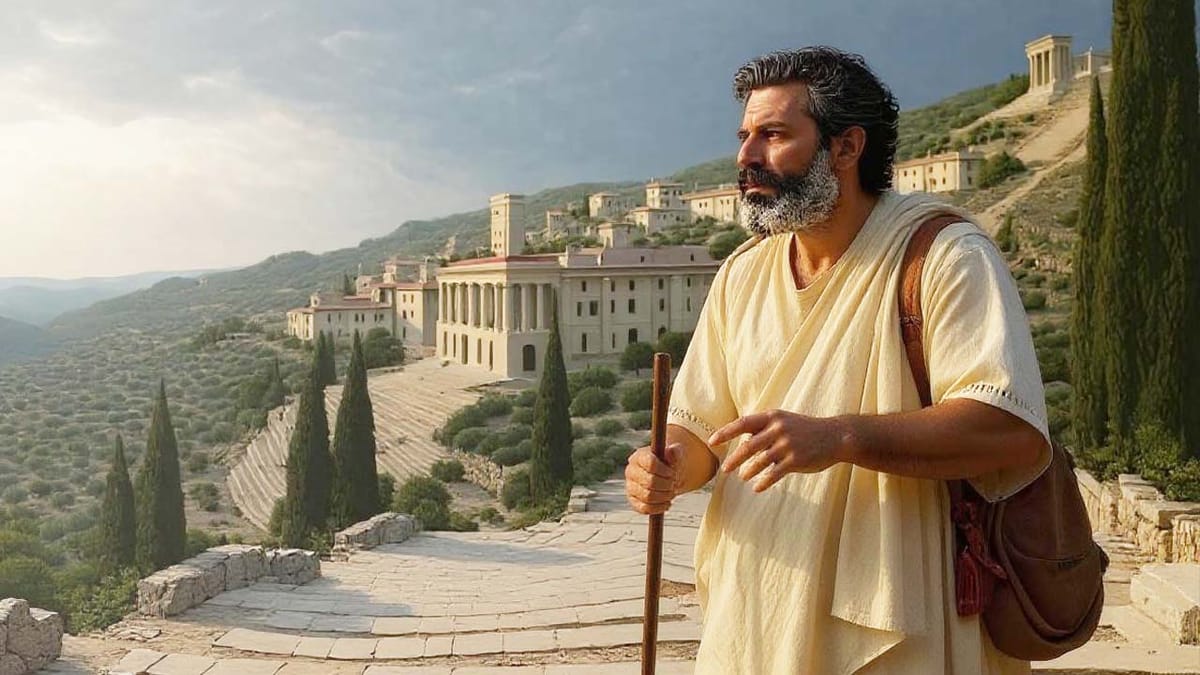
Of course, Paul was a vocal follower of Christ. There is no dispute about that. But for some mysterious and stubborn reason, he constantly chose to identify himself over and over with his Jewish heritage, even calling himself a Pharisee repeatedly. Why? There were groups of Jews in various cities across the Mediterranean who followed Jesus, as Paul did, and they never thought of themselves as a separate religion, either, always identifying themselves as Jews who followed “The Way.”
In fact, it is also common to hear that before Paul became a follower of Christ, he persecuted Christians. Well... Acts 9:1-2 says he actually persecuted “The Way,” which we can identify as Jewish followers of Rabbi Jesus (Just like Paul later became).
“Now Saul, still breathing threats and murder against the disciples of the Lord, went to the high priest, and asked for letters from him to the synagogues at Damascus, so that if he found any belonging to the Way, both men and women, he might bring them bound to Jerusalem.” (Acts 9:1-2 NASB)
Historical Accuracy
Does it make a difference what we call it, “Christianity” or “The Way”? To a serious student of the Bible, it does. And historical accuracy is very important when speaking of antiquity and reading the Scriptures! Even in the city of Ephesus, Paul proclaimed the teachings of “The Way” in the Synagogue (Acts 19:9), and the disturbance among the pagans that occurred there had to do with the teachings of “The Way,” not Christianity. Paul preached the gospel (the good news) of the Messiah, but he never preached “Christianity.” This is the difference that most people do not recognize today, as these terms have now become synonymous, and thus, even Paul became a Christian.
If this sounds strange or a bit awkward to you, it's because we are all too used to seeing the world from a contemporary point of view, through a lens of modernity. For many people today, the gospel and Christianity are one and the same. That is how they encounter these ideas in their modern daily lives. If I ever venture to mention "the Jewish gospel," I get bewildered and confused looks because these things do not line up in many people's minds. Everyone knows that pickles go with olives, bread goes with butter, and cheese is paired with crackers. Right? But was it always that way? Such food pairings are intuitive to many, but only in some cultures and only today, but not 300 or 1000 years ago. From a historical perspective, the emergence of the non-Jewish Church and the religious path called Christianity are post-gospel and post-apostolic developments, and the Jewish gospel predates them.
 Pinchas Shir
There was no Christianity as an organized religious institution or a truly cohesive consolidated movement when Paul was alive. People could be called followers of Christ, but that merely described the lifestyle and way of thinking they embraced, grass-roots ideas, not yet their social or ethnic belonging. And by the way, the same can be said of Judaism. Judaism, as an organized religion with strictly defined boundaries, also did not yet exist in the first century CE. There was no unified, agreed-upon, by-consensus system called Judaism just yet, and what was deemed "Jewish" was much broader than it is today. The term existed, but it stood for a mode of life and ethnic behavior that expressed certain cultural loyalties. In fact, Ἰουδαϊσμός (iudaismos) mentioned in Galatians 1:4 should probably be translated “Jewish way of life,” not Judaism. In the first century, there was Paganism and Hellenism, the Greek way of life, the universal practice of recognizing many divinities and powers. Of course, the opposite of paganism was the henotheistic way of seeing the world, the Israelite culture, but Judaism, Ἰουδαϊσμός (iudaismos) in the first century, should be understood as an ethnic, familial, religious, and cultural affiliation which demanded loyalty to one God of Israel and was expressed in a broad list of practices and social norms.
What about Christians? Yes, that term already existed in the 1st century. In Acts 26:28, King Agrippa accused Paul of wanting to make him into a Christian. The author of Acts 11:25 tells us that many non-Jews embraced the good news as Jews from Cyrene proclaimed the good news of salvation in Antioch. And these non-Jews were indeed called Christians. Peter also uses this term in his sobering teaching:
“…to the degree that you share the sufferings of Christ, keep on rejoicing, so that also at the revelation of His glory you may rejoice with exultation. If you are reviled for the name of Christ, you are blessed, because the Spirit of glory and of God rests on you. Make sure that none of you suffers as a murderer, or thief, or evildoer, or a troublesome meddler; but if anyone suffers as a Christian, he is not to be ashamed, but is to glorify God in this name.” (1 Peter 4:13-16)
In its earliest form, the term Χριστιᾱνός (christianos), “Christian” or a Christ-follower, was a highly politically loaded term, affirming one’s loyalty to the Jewish Christ as opposed to Caesar and the gods of Rome. It was tied to Israel and Israel’s unique and exclusive God. Most Christians today do not see the term from such a national or politically charged perspective. No doubt, as people spread the good news of the Messiah’s sacrifice beyond the Jewish circles and more non-Jews embraced this teaching, the term came into broader use and changed its meaning. The social and political situation has changed, the monopoly of polytheism has disappeared, so now it is well-known and common, and few people have heard of “The Way.”
So, was Paul a Christian? Not in his own words. He would have insisted that who he was after the Damascus road experience was inseparable from Christ, and that the Messiah is whom he served with all his heart. But Christianity, as a social and religious identity, a community that stood apart from Judaism, did not exist in Pauline first-century-bound thinking. As a Jew, Paul’s loyalties to God and Israel were clear and unambiguous. He did not need another name to show his belonging to Christ, since the Messiah was already a thoroughly Jewish and unique concept. There was no one else around just yet to claim that idea for themselves.
We may choose to think of Apostle Paul in narrow categories that work for us today, but perhaps, being a Jew and a Pharisee who followed the Messiah was enough for Paul himself. My invitation is always to study Paul on his own terms without placing him into a framework that would be very foreign to him.
 Pinchas Shir
 Pinchas Shir
 Pinchas Shir
 Pinchas Shir