Is There Such a Thing as a Righteous War?

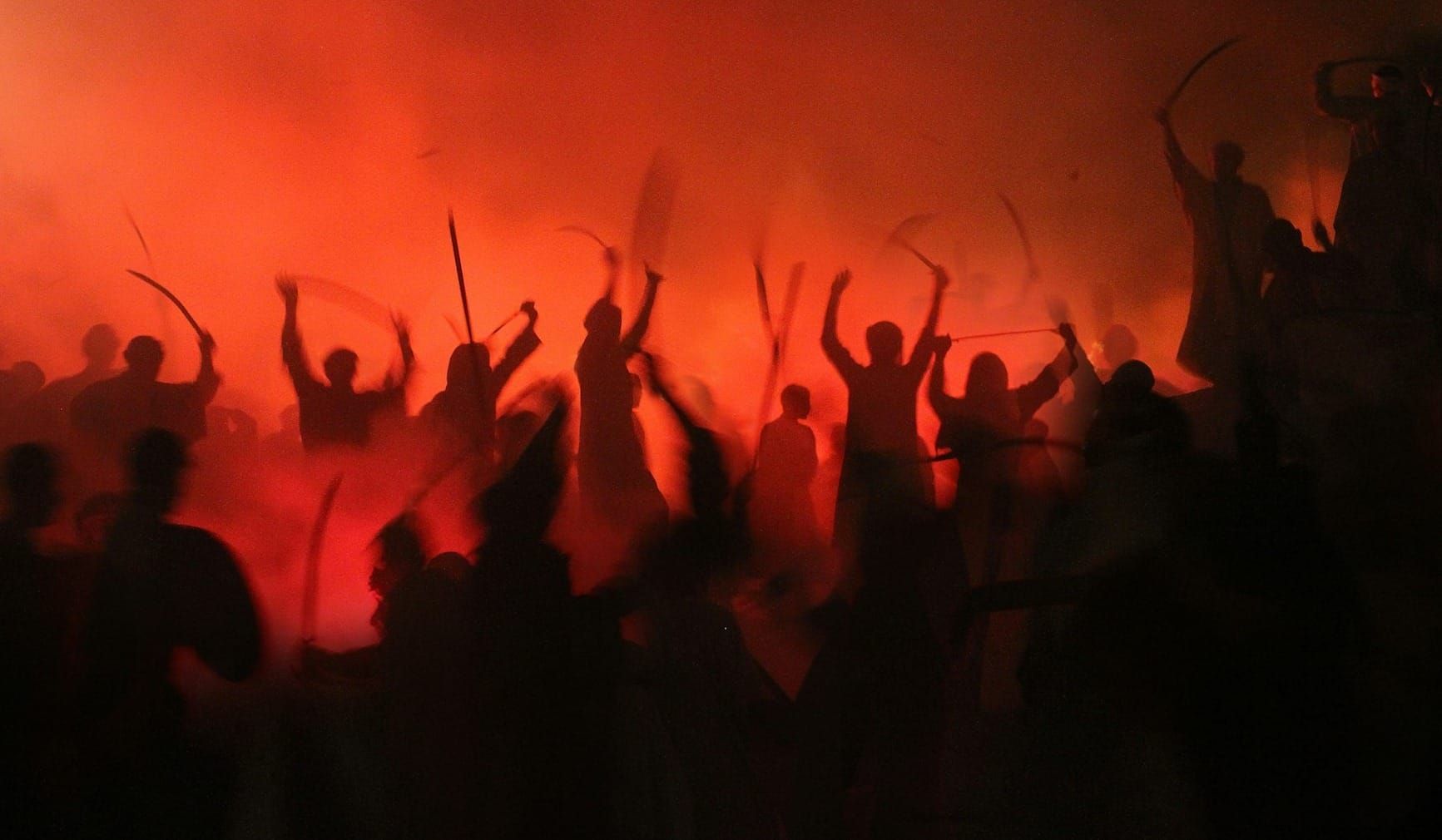
War is among the darkest realities of human existence. It leaves cities in ruins, families divided, and generations marked by trauma and loss. No sane person celebrates war, and few emerge from it unchanged. Yet history repeatedly reminds us of an uncomfortable truth: war is sometimes unavoidable. Nations invade. Empires expand. Innocent people are threatened. Evil does not always yield to persuasion, so fighting breaks out. This raises an ancient and unresolved question: Is there such a thing as a righteous war?
For many modern readers, the answer is instinctively no. War appears inherently destructive and therefore morally indefensible and evil. Yet the Bible presents a more complex picture. The Scriptures consistently elevate peace as an ideal, but it does not treat peace as the only moral category in a fallen and broken world. More importantly, the God of Israel is not depicted as a passive observer of history. At times, He is described as a warrior who intervenes against oppression and evil:
“The LORD will go forth like a warrior, He will arouse His zeal like a man of war…” (Isaiah 42:13) “The LORD is a man of war; the LORD is His name.” (Exodus 15:3)
If God is perfectly just, and if God sometimes acts in judgment through war, then the concept of a “righteous war” cannot be dismissed outright. The real question is not whether such a thing exists in principle, but whether human beings are capable of recognizing it without distortion.
The Problem with Human Judgment
The Hebrew Bible is deeply realistic about human moral perception. Within every person exists both the yetzer hatov (יֵצֶר הַטּוֹב), the inclination toward good, and the yetzer hara (יֵצֶר הָרַע), the inclination toward evil. Human motives are conflicted and rarely pure. Pride, fear, nationalism, revenge, and self-interest often disguise themselves as justice. For this reason, human declarations of righteousness must always be treated with caution.
“The heart is more deceitful than all else and is desperately sick; who can understand it?” (Jeremiah 17:9)
Nearly every side in every major armed conflict believes itself to be justified. Kings invoke divine approval. Nations appeal to morality and history. Armies march under banners of justice, peace, and liberation. Yet history repeatedly reveals mixed motives and unintended consequences. A biblical theology of war must therefore begin with humility: Human beings are not the final arbiters of justice. God is.
 Pinchas Shir
The First War in the Bible
The first recorded war in the Hebrew Bible appears in Genesis 14. Four Mesopotamian kings invade Canaan and take captives, including Lot, Abraham’s nephew. Abraham responds by assembling a small force, pursuing the invaders, and rescuing the captives. This narrative is significant because Abraham is not seeking conquest or expansion. His action is restorative, and the emphasis falls on rescue, not domination. Later Jewish traditions often read this episode as a prototype of legitimate warfare undertaken for the protection of human life rather than territorial ambition.
War as a Divine Judgment
The most difficult biblical texts on war are the conquest narratives concerning the Canaanite nations. These passages are frequently interpreted in modern discourse as an endorsement of genocide. However, within the biblical framework, they are presented differently: as acts of divine judgment against entrenched systemic evil.
The Promised Land was explicitly not given to Israel because of their moral high ground or righteousness: “It is not because of your righteousness… that the LORD is driving them out before you.” (Deut 9:4–6). Rather, the narrative frames the conquest as judgment upon nations whose corruption has reached a limit, in logic (though not in form) similar to the Flood narrative (Genesis 6-9).
This distinction becomes crucial for a proper framework on wars because the same God who authorized judgment against Canaan later authorized judgment against Israel.
Righteous War Against Israel
One of the most sobering lessons of the Hebrew Bible is that Israel does not permanently occupy the moral high ground, and unfaithfulness to the God of Israel results in punishment. The prophets repeatedly warned that covenant violation, injustice, idolatry, and oppression would bring national catastrophe. Eventually, Babylon became the instrument of that painful judgment.
From Israel's perspective, the Babylonian invasion was a tragedy of unimaginable proportions. Jerusalem was destroyed. The Temple was burned. Thousands were exiled. Yet the prophets, such as Jeremiah, explicitly describe Babylon as carrying out God's purposes.
For those who believe the Bible, this creates an uncomfortable reality that is hard to ignore. If a war can be righteous because God ordains it, then God's people may find themselves on either side of that war. The lesson is profound and ominous: righteousness is determined by God, not by tribal loyalty.
 Pinchas Shir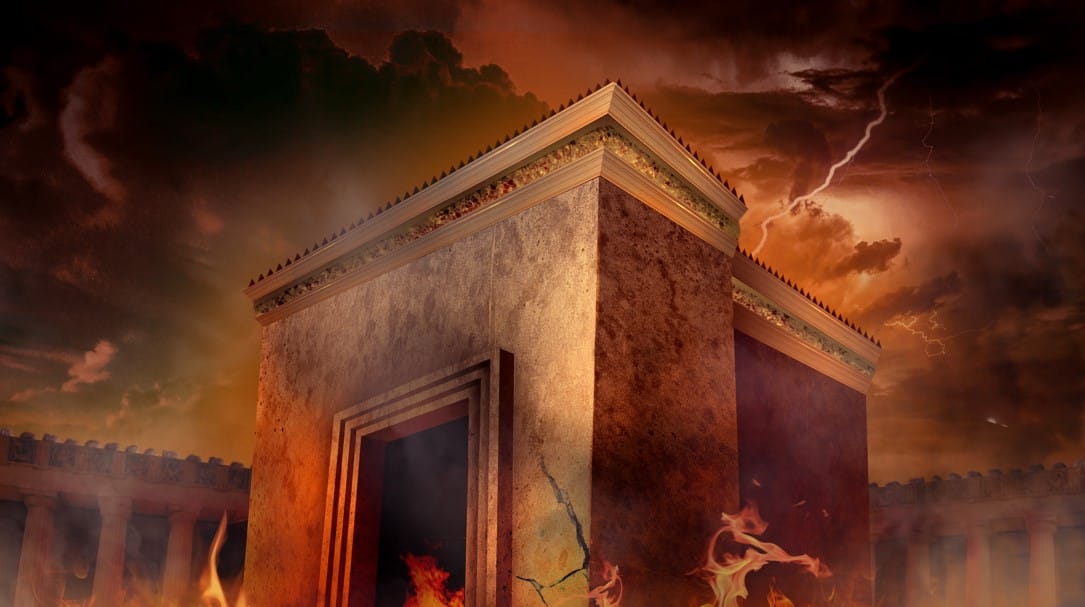
The Limits of Holy Wars
King David was victorious in many battles and greatly expanded Israel's borders. Yet his career also demonstrates a certain tainting and moral ambiguity that often accompanies prolonged warfare and violence. Although David was chosen by God and blessed in his victories, he was denied the privilege of building the Temple. The Almighty told David, "You have shed much blood and have waged great wars" (1 Chron. 22:8).
The statement does not necessarily condemn every war David fought. Many of his campaigns appear to be justified and necessary, and they were clearly not against God's purposes. Yet this strong sentiment reminds readers that even legitimate warfare leaves scars and bloodshed, necessary or not, bloodshed is a stain. Victory itself, even with God's help, does not sanctify violence.
Obligatory and Optional Wars
Later Jewish tradition developed useful categories for thinking about warfare. The Mishnah and Talmud distinguish between a milchemet mitzvah (מִלְחֶמֶת מִצְוָה), a commanded or "obligatory war," and a milchemet reshut (מִלְחֶמֶת רְשׁוּת), a discretionary or "optional war." (Babylonian Talmud, Sotah 44b; Jerusalem Talmud, Sotah 8:10 [44b-45a] Sifre Devarim, 190-191; Mishneh Torah, Laws of Kings and Their Wars, 5:1-2)
The first category includes wars of self-defense and wars explicitly commanded by God. Such conflicts are considered necessary for the preservation of the community. The second includes expansionary campaigns or conflicts undertaken for political or economic reasons. These required greater scrutiny and additional authorization. While later rabbis debated definitions and applications for some time, the distinction reflects an important principle they recognized: not all wars are morally equivalent.
The Torah consistently places clear constraints on warfare, presenting it not as sanctioned violence but as morally-bound action within a fallen and broken world. In some cases, the Torah directs defensive force in the protection of life (Ex 22:2-3). In others, it requires that even when conflict is unavoidable, an offer of peace must first be extended and unnecessary destruction should be avoided (Deut 20:10-19). There are also more difficult narratives, such as Numbers 31, where warfare is depicted within an extreme and unique framework of divine decree rather than ordinary human initiative.
Outside the Torah, this same pattern of restrained violence continues in later biblical narratives: Nehemiah describes armed defense during the rebuilding of Jerusalem (Neh 4), while Esther records a sanctioned form of defensive survival warfare in light of an ethnic cleansing threat (Esther 8-9). Taken together, all these passages consistently portray warfare as something restrained, governed, limited, and morally guided rather than left to base human impulses.
The Just War Theory and Nonviolence
In Christian thought, the ethical tension of biblical war was formalized into what became known as Just War Theory. Augustine of Hippo (354–430 CE) developed such reasoning in City of God, Book 19, and Contra Faustum, Book 22. According to him, war may be morally permissible when: it is waged under legitimate authority, it aims at peace rather than hatred, it is motivated by love of neighbor rather than vengeance. Thus, war remains tragic, but not always avoidable in a fallen world.
Thomas Aquinas (1225–1274 CE) later outlined three criteria for a just war in Summa Theologiae, II–II, Question 40, Article 1. He identified: Legitimate authority, just cause, and right intention. Aquinas did not present war as good in itself, but as conditionally permissible under certain constraints.
Later, Anabaptists and Quakers developed a strong pacifist ethic grounded in rejecting "eye for an eye" and embracing the teachings of "turning the other cheek" (Matthew 5:38-39). However, a careful reading of the text used to advance such a perspective through the Jewish tradition of that day would suggest that Jesus was illustrating a middah k’neged middah (מִדָּה כְּנֶגֶד מִדָּה) “a measure for measure” principle, and not exactly violence. Ancient Rabbis (like Jesus) believed that God’s justice often operates in a reflective way.
The Pharaoh drowned Israel's children, so the Egyptians drowned in the Sea of Reeds. Korah sought to elevate himself by rising up against Moses and Aaron and descended into the depths of the earth. Haman sought to eradicate all Jews and build gallows for Mordechai, but was hanged on those gallows as his sons and allies were defeated. If one wants to avoid the measure (middah), the cycle could be interrupted. Turning the other cheek is a proper behavior of kin choosing not to retaliate because they share a communal covenant bond that benefits the entire family. Voluntary giving up the option to retaliate for the sake of the greater, but less personal good. It's not a reasonable guideline for interacting with the broader world or with outsiders and attackers, though.
 Pinchas Shir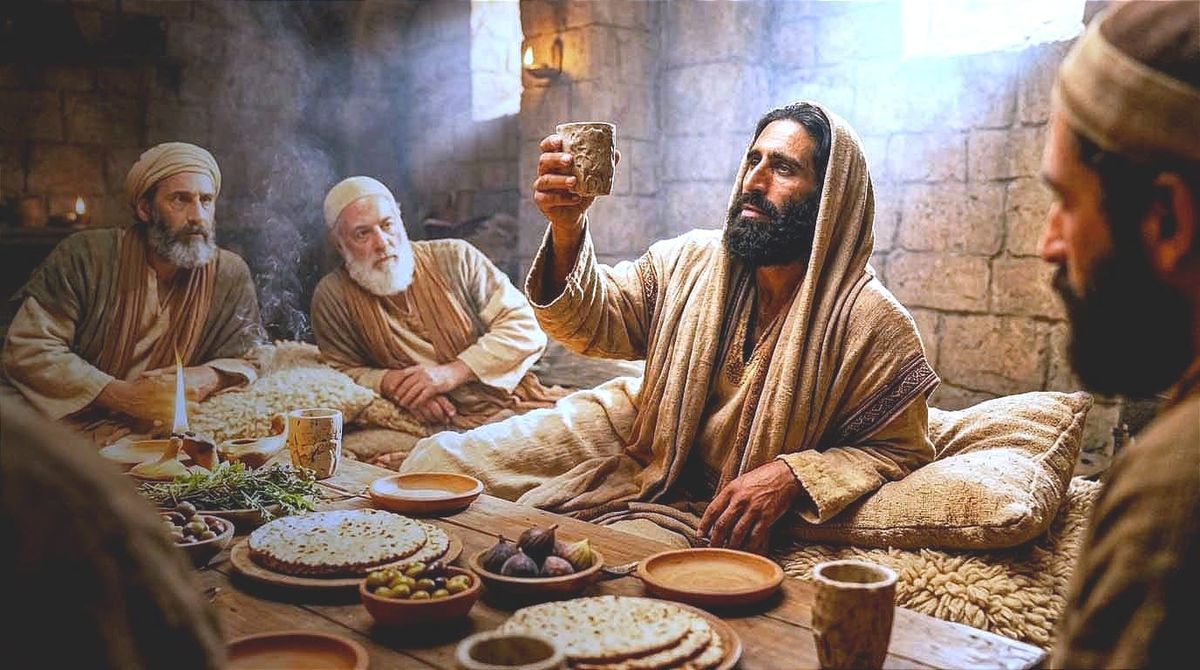
Outside of the Sermon on the Mount, the Bible speaks of defensive actions, wars of divine judgment, and divinely sanctioned warfare that sit uneasily with the ideal of absolute pacifism. A selective elevation of one ethical trajectory over others creates an imbalance. The Bible itself consistently holds multiple moral categories in tension rather than collapsing them into a single absolute.
The Pursuit of Peace
Despite numerous military narratives, the Bible's ultimate vision is not endless warfare. The Bible is brutally honest in its portrayal of the harsh realities of human history. It paints human activities in a very believable light, but it always leads towards hope. Prophet Isaiah foresees a future in which nations "beat their swords into plowshares" and "learn war no more" (Isaiah 2:4). The Messiah in the Hebrew Bible is called Sar Shalom (שַׂר שָׁלוֹם), the Prince of Peace. Despite war Messiah wages to defeat his enemies (Is 11:4 63:1-6; Zech 9:13-15, 12:8-9, 14:3; Daniel 7:13-14, 26-27; Psalm 2:9, 110:5-6), peace remains the overarching biblical ideal.
War exists because humanity has fallen. Violence is tolerated because evil exists. It is sometimes necessary because injustice exists, and measures must be taken to set the course right. But even in apocalyptic end-time visions, war is never portrayed as the final goal of human history.
The Limits of Moral Certainty
Is there such a thing as a righteous war? According to the Bible, yes. But the Bible presents righteous war very differently from the way human beings often imagine it. Righteous war is not defined by patriotism, military success, historical grievances, popular opinions, or eloquent political rhetoric. It is defined by God's desire for justice, which he himself reveals if he chooses. The challenge is that human beings rarely possess God's perspective.
This is why adhering to the Bible as a sacred text calls for both moral courage, discernment, and sincere humility. There are times when evil must be resisted. There are times when people must fight to defend the innocent. Yet there is also a great danger in assuming that our cause is automatically righteous simply because it is ours or that someone else is weaker.
The Bible leaves us with an unresolved tension that gnaws at our consciousness. War may sometimes be necessary. War may even sometimes be just. But human beings should be slow to claim certainty about either. The God of Israel alone sees every motive, every injustice, and every consequence. Ultimately, He alone can perfectly judge whether a war is truly righteous.
 Pinchas Shir