How did Jesus "fulfill" the Torah?

Messiah’s famous words about Torah declare, “Do not think that I came to abolish the Law or the Prophets; I did not come to abolish but to fulfill” (Mat 5:17 NASB). This verse has been explained countless times in church sermons, academic lectures, and scholarly commentaries. What can I possibly add to this ancient conversation? There are many angles from which to approach this topic, but I will focus on one by asking a simple question: How, exactly, and in which way did Jesus “fulfill” the Torah in Matthew’s gospel?
It is common for modern followers of Jesus to imagine that there is some sort of a celestial checklist that the Messiah had to complete. Many modern Jews think this way as well. There are lists of criteria Messiah must fit. Indeed, Matthew uses the Greek verb πληρόω (plerao), “fulfill,” in what looks amazingly like a “list of messianic prophecies".
According to Matthew 1-2, Yeshua was born was to fulfill Isaiah 7:14 – “a virgin shall conceive…” (Matt 1:22-23); the Bethlehem birth was to fulfill Micah 5:2: “and you, Bethlehem…” (Matt 2:5-6); Yeshua’s presence in Egypt was to fulfill Hos 11:1: “out of Egypt I called my son” (Matt 2:15); Herod slaughtered children to fulfill Jer. 31:15: “a voice was heard in Ramah…” (Matt 2:17-18); Jesus went to live in Nazareth to fulfill: “he will be called a Nazarene”(Matt 2:23). A common notion that this list of prophetic passages awaited future “fulfillments” to be checked off the list may be quite far from what Matthew actually meant to convey.
All of these Scripture citations are "recollections" of the past, rather than “predictions” of the future. According to Matthew, Yeshua repeats, relives, and reenacts Israel’s experiences described in the Scriptures.
Yeshua of Nazareth was called "God's Son" just as Israel in Torah. Israel came out of Egypt, and so did Yeshua. Yeshua wandered the wilderness and was tempted just as Israel in the days of Moses. Both went through the waters of the Jordan River to enter a new stage of life. Like Israel, Yeshua (Jesus) was persecuted and afflicted. What happened to Israel happened to Yeshua.
The Aramaic equivalent of Greek πληρόω (plerao) is קִיֵּם (qiyem), which means “to establish,” “to uphold,” or “to stand upright.” Likewise, קְיָים (qiyam) and קְיָימָא (qiyama) mean something "firm" like a law, vow, or covenant. In Hebrew קִיֵּם (qiyem) is “to fulfil” or “to perform” (Ps 119:28) but also “raise up” and “build up” (Isa 44:26; 58:12; 61:4) and “validate” or “confirm” (Ruth 4:7; Est 9:29).
This is the way in which Jesus fulfilled the Law and the Prophets: the Messiah’s life explicitly mirrored all these events in Israel’s long journey as a people. Everything Yeshua did, established, confirmed, and validated is how God led his people through the pages of history.
 Pinchas Shir
 Pinchas Shir
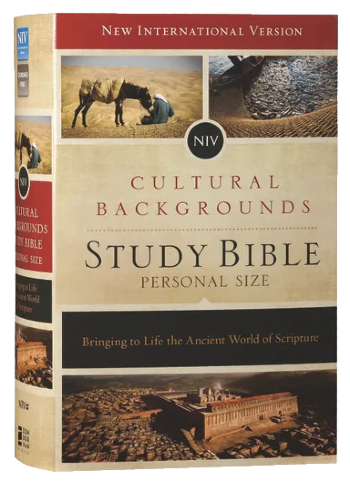
NIV Cultural Backgrounds Study Bible
The notes in this Study Bible are very helpful. It is packed with expert insight into the customs, culture, and literature of biblical times. These fascinating explanations will serve to clarify your study of the Scriptures, reinforcing your confidence and bringing difficult passages of Scripture into sharp focus.