
Facing the Holy and Each Other in Prayer


For some, prayer is free-flowing, meandering from one topic to another, like a summer breeze, a living dialogue, or a musical improvisation. For others, prayer is something more formal, organized, and structured with care. It's not that one approach is superior to another, but there is room for both practices. I personally see the need for both approaches, which is why I use the Siddur and pray extemporaneously as well. If you were to ask me what I think Rabbi Jesus and the apostles' prayers were like, I would say they also blended some formulaic communal prayers with personal supplications voiced in their own words. But there was something in their prayer lives that many of their modern followers often lack. Direction. They oriented themselves in a very specific way.
For thousands of years, Jews have been speaking to God while facing Jerusalem. Muslims today have a similar custom, only they bow toward the city of Mecca. Such cultural practice may seem a bit unusual for many Christians who direct their gaze elsewhere, to the church altar in front of them or to the heavens above. But for Jews, turning towards Jerusalem during prayer is an ancient custom etched on the pages of the Bible (Daniel 6:10; 1 Kings 8:29-35). Of course, it's not about the city itself, but about the holy mountain, the spot God himself chose for his house three thousand years ago (1 Kings 8:44, 1 Chron 22:1-10). Jerusalem is a special place where God manifested himself in the past, and people have not forgotten it.
This tradition of orienting oneself, praying "towards God's house," has a long history, and I wanted to share a quote from an ancient Jewish source - Tosefta on Berachot 3, to expound on the exact reasons behind this unique custom. If you are wondering about how far back these words go, the text of Tosefta is quite ancient. It contains discussions of various Jewish traditions put into writing around the 3rd century CE. Of course, many of those traditions existed for much longer in oral form before they were finally fixed in writing in the second and third centuries CE. When Mishna was compiled, some of its content was redacted and set aside, and that body of text became known as "Tosefta," which means “supplement" in Aramaic. So here are some sentiments from the sages about the direction of prayers from a supplement to Mishnah, a document that preserved much of Jewish tradition followed in the first-century Israel.
 Pinchas Shir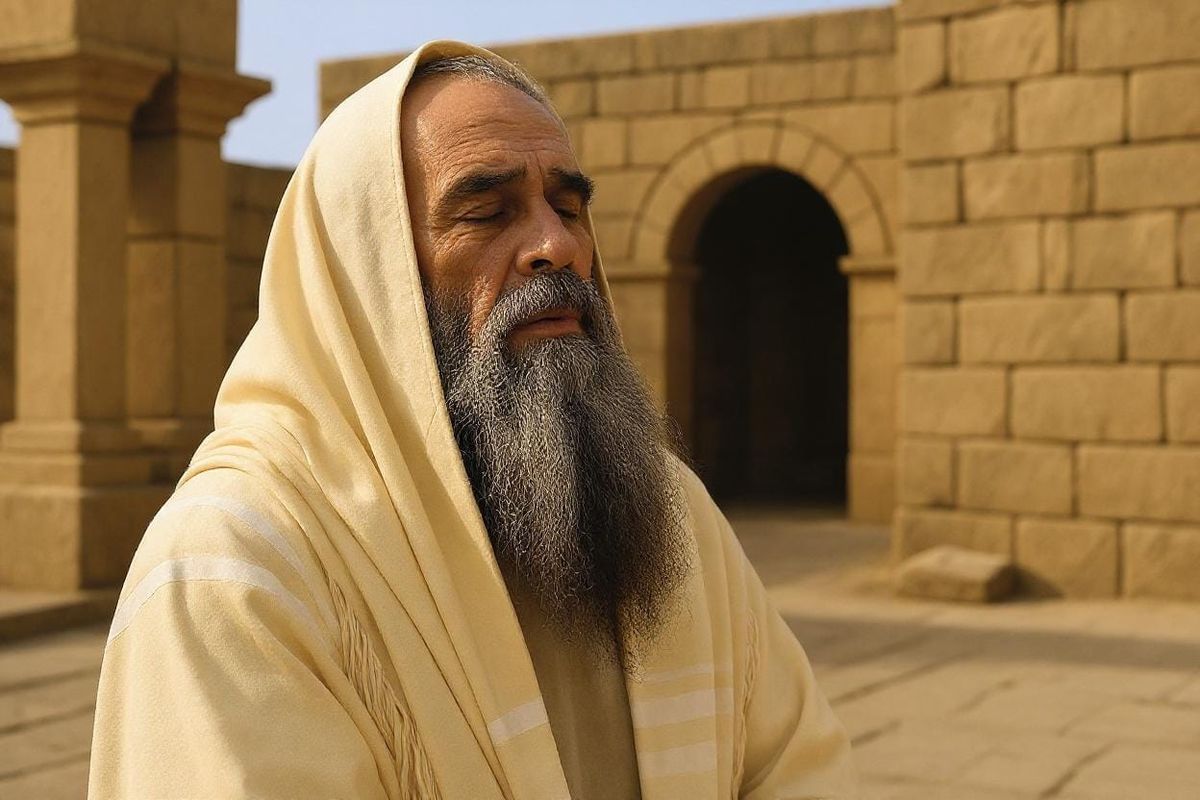
“A blind person and someone who cannot recognize the directions, [should] direct their hearts towards God, and [only then] pray, as it is said, “And they should pray to Hashem…” (1 Kings 8:44) Those that are standing outside of the Land of Israel [should] direct their hearts towards the Land of Israel, and [only then] pray, as it is said, “And those that pray to You by the way of their land…” (1 Kings 8:48) Those that are standing in the Land of Israel [should] direct their hearts towards Yerushalayim, and [only then] pray, as it is said, “And they will pray to Hashem by the way of the city that You have chosen…” (1 Kings 8:44) Those that are standing in Yerushalayim [should] direct their hearts towards Bet Hamikdash (Temple), as it is said, “…and they should pray towards this house.” (2 Chronicles 6:32) Those that are standing inside the Bet Hamikdash [should] direct their hearts towards the Holy of Holies and [only then] pray, as it is said, “… they will pray towards this place.” (1 Kings 8:30). It comes out that [all of those] standing in the north will be facing the south, [all of those] standing in the south will be facing the north, [all of those] standing in the east will be facing the west, [and all of those] standing in the west will be facing the east. And it will come out that all of the Jewish people will be praying towards one place.” (Tosefta Berachot 3)
Did you catch the core idea of focusing on the Holy of Holies and, at the same time, actually facing each other as one imagines layers and concentric circles around God's chosen place of glory? Wherever Jews live in the world, our communal prayers are always spoken with a particular direction in mind, Jerusalem. This passage explains this common practice. Even the architecture of many modern synagogues today is designed to deliberately orient worshippers towards Zion. Today, many sway and rock as they whisper and pray, occasionally even bend their knees and bow, turning towards the last known resting place of God's glory. You may have noticed how traditional Jews tend to employ their entire bodies in prayer. People turn and even bow towards Jerusalem as an act of faith and enduring hope. The hope is that the Almighty's indescribable presence will return, and it will return in glory and power when we need it the most. It will return to the place where God previously manifested, a place he chose.
More and more people today realize that when we are praying on the opposite sides of the globe, we are actually facing each other, orienting ourselves in a special way as we worship God across space and time. This sort of prayer never ceases. If you reflect for a moment, it's a beautiful picture of unity that many hope will bring about the promised restoration of the world. One day, every knee will bow, and on that day, every eye will also be drawn to that very place, and we can begin this practice today (Is 45:23; Rom 14:11).
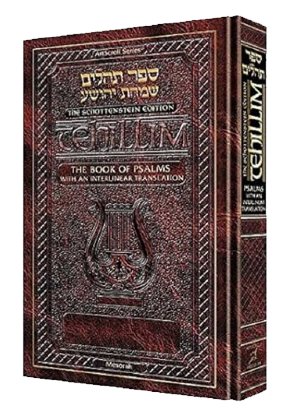
Hebrew-English Interlinear Psalms
For those who love Psalms, especially the way they sound in Hebrew, this handy volume presents them in an interlinear format. As it is with most poetry, sometimes translations are not so straightforward, and it's so easy to see the original words that stand behind the English text. This volume allows students of Hebrew to quickly build their biblical Hebrew vocabulary and, at the same time, immerse themselves in their favorite psalms. I have used it for both study and for devotional reading as well. And I can recommend it for those who would like to try the Psalms in their original language and grow in their comprehension of the biblical language as they read.