Do you know Angels?


I would venture to say that most of us have never seen angels, or maybe we have, and we had no idea we even had such an encounter. That, of course, all depends on what you think angels are and what you expect them to look like. The writer of the book of Hebrews warns us that "some have entertained angels without knowing it" (Heb 13:2). And that is entirely possible. I believe most people may not recognize angels because they imagine them solely based on the art and lore they have been exposed to in their culture. They expect what they imagine and, in reality, encounter something completely different.
In some people's imagination, angels are plump naked toddlers with curly hair and wings. Add bow and arrow, and you get Eros, the Greek deity of love, desire, and attraction (also frequently mixed up with Cupid). How many works of classical Western art depict angels like that? There are countless examples, so it's no wonder that this is the image that comes to people's minds when they hear the word "angel" - a naked baby with wings. Our minds are inundated with such imagery at every turn, so our mind forges the path. Yet these depictions and details are inspired entirely by Greco-Roman religious lore and don't have any bearing on the biblical descriptions of angels.
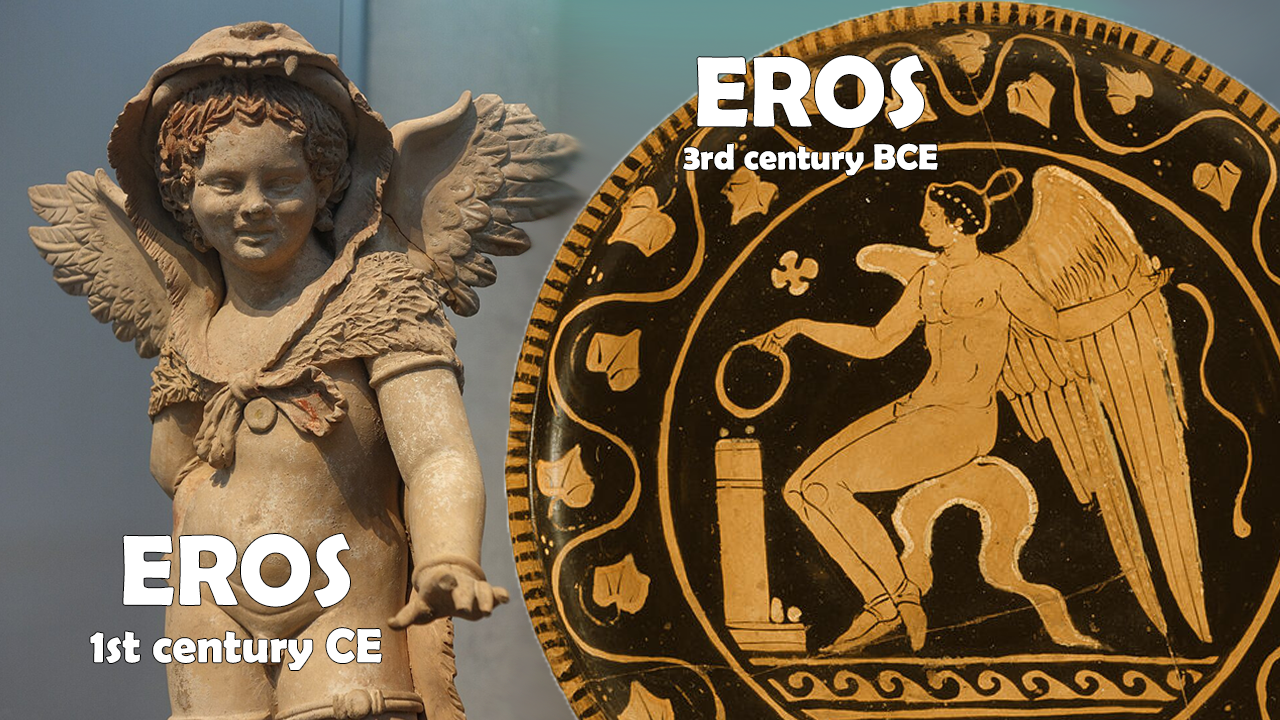
Let's dig a little deeper... Why do people imagine angels to be creatures with two bird-like wings? In fact, in Western culture, many people imagine angels as slender, tall, robed in loose clothing, often fair-skinned and long-haired, and particularly with two bird-like white feather wings. These angels are often male, but sometimes very effeminate-looking young males, and at other times they are depicted as attractive females with elegant wings. Sounds about right? What gives us the idea that this is what the creatures we call angels really look like? Certainly not the Bible.
In modern Western culture, the word "angel" is often associated with goodness and even exemplary behavior; people would sometimes exclaim, "He is such an angel!" But linguistically speaking, the English word comes from Greek angelos (ἄγγελος), which simply means an "envoy" or a "messenger." The messages they carry have nothing to do with them being "good." The Hebrew term malakh (מַלְאָךְ) means the same. In ancient Greek literature, some messengers were ordinary, and others were not so ordinary because they came from the gods. Similar ideas exist in Hebrew: some are humans, and others are supernatural and otherworldly beings in the service of the Most High. In each case, the word "angel" is closely tied to the function of delivering news and messages.
 Pinchas Shir