Was the Hebrew Bible Really Canonized at Jamnia?

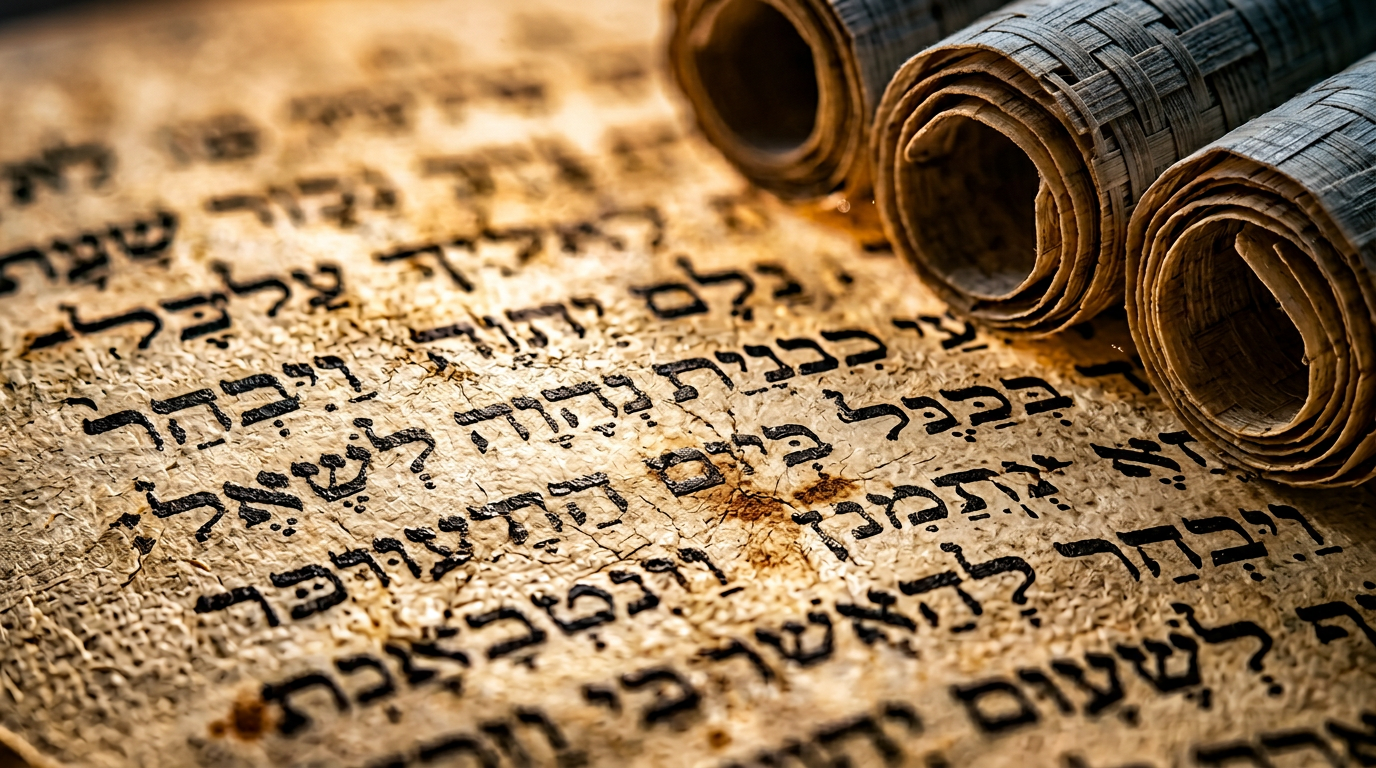
In the 1st century CE, Jamnia or Yavneh (יַבְנֶה) was a small town on Israel’s southern coastal plain, between Jaffa and Ashdod. It is widely believed that Jamnia hosted discussions on the establishment of the Jewish canon, and that the Hebrew Bible was canonized there. According to some rabbinic sources, when the Jerusalem Temple was destroyed by Titus in 70 CE, Yochanan ben Zakkai, a leading scholar from the Pharisaic school, established a learning center in Jamnia. Its not hard to imagine that this endeavor attracted many rabbis to the region, and Jamnia was established as a preeminent Jewish religious hub outside Jerusalem.
The Theory of Hebrew Canon
Since the late nineteenth century, many scholars have believed that in approximately 90 CE, a religious council convened in Jamnia and closed the boundaries of what eventually became the Jewish canon. According to the Talmud, after the Temple’s destruction, Jamnia indeed gradually became a new spiritual center in Israel. Israel’s legislative body (the Great Beit Din, later referred to as the Sanhedrin) relocated to Jamnia (Babylonian Talmud, Rosh Hashanah 31a). Other names often associated with Jamnia are Gamaliel II, the leader of the Beit Din, and Akiva ben Joseph, a charismatic leader from the days of the Bar Kochba Revolt. It would make sense that Jamnia was the new place where all important matters were decided.
The idea of the Council of Jamnia as a body that brought about the Hebrew Bible Canon was first introduced by Heinrich Graetz in 1871. It was assumed that since Christians had the Nicean and Chalcedonian councils to establish such matters, something similar must have taken place in Jamnia at the turn of the century. This was an assumption built on Christian history. Graetz’s theory became a widely accepted view of scholars of his day. Phrases such as “on that day” contained in rabbinic discussions (Mishna, Yadaim 3:5-4:4 and Babylonian Talmud, Berakhot 28a) on the topic of the authority of books created an impression that there was a deliberation that took place during a single day’s session, thus creating the misnomer of the Council of Jamnia.
But Jamia was not exactly assembled like Nicea, and what scholars did there was quite different. The study circles made up of rabbis did not gather there to write decrees, but rather to learn from one another and to preserve ancient traditions and the words of their teachers. For Jews, preserving spiritual knowledge was a matter of cultural and religious survival.
Since the 1960s, Graetz’s theory and his assumptions have been questioned. (Jack P. Lewis, Lee M. McDonald, James A. Sanders, Sid Z. Leiman, and others). Today, modern scholars are skeptical as to whether there was ever a synod or a council in Jamnia dedicated specifically to matters of canonization. There are only bits and pieces of such discussions and no clear evidence that the purpose of those dialogues was to establish any sort of scriptural standard. But in popular thinking, this old theory of Jewish Bible canonization survives to this day.
What Really Happened in Jamina?
There are several important ancient sources (Josephus, Against Apion 1:8; 4 Ezra 14:44-45, Babylonian Talmud, Baba Bathra 14b, and others) which indicate that a generally accepted list of sacred writings already existed in the days of Jamnia. The Jamnia sages, for example, explored the merits of Ecclesiastes, Song of Songs, Ruth, Esther, Proverbs, and Ezekiel as reported in traditional Jewish sources. However, their inquiries into selected teachings, contained within those books, should not be seen as an attempt to determine the inspiration of those works, canonize or settle the status of those books. The parties involved never imagined that they had the authority to create a canon for Israel and, frankly, were not familiar with such a concept.
Whether the sages held a special council or if their discussions about the holy books were ongoing, or had a canon in mind, the enduring significance of Jamnia lies not in the closing of the Jewish canon, but in ensuring the cultural and religious survival of the Jewish people. The story of the canon of the Hebrew Bible is long and gradual. It did not emerge in a way the New Testament did, as some imagine. But Yavneh is still important!
Prior to 70 CE, Judaism was fragmented into various sects that did not agree on many key matters of Jewish life. The temple kept the people together, but now it was in ruins. The Jamnia sages intentionally promoted an inclusive, pluralistic, and non-sectarian Judaism. In light of new circumstances, they created a more flexible system of Torah interpretation that accounted for diversity and charted a new way to relate to God and his covenant with Israel (Shaye Cohen). They shaped the possibility of a Jewish faith and life without sacrifices, priesthood, and the centrality of the Jerusalem Temple. After all, the Jewish way of life has survived without sacrifices before, and this was yet another necessary stage.
The spiritual developments that took shape at Jamnia proved to be very timely. The Second Jewish Revolt against Rome (132-135 AD) further destabilized the Jewish society. The loss of countless lives, destruction of Jerusalem itself, the expulsion of Jews from its vicinity and widespread persecutions under Hadrian devastated the nation and brought a new era of Jewish life outside of Judea (Josephus, Jewish Wars VI. 9.3; Cassius Dio, Roman History LXIX, 14:1). After the Bar Kochba Revolt in the days of days of Antoninus, the Yavneh scholars established a new center in the Galilean city of Usha (140 AD) and continued their task of preserving traditions and interpretations of Torah that became the foundation of the Mishna. (Babylonian Talmud, Sanhedrin 31b, Song of Songs Rabba II. 5).
 Pinchas Shir
 Pinchas Shir